Facelifted S-Class prioritises software architecture, AI integration & refined luxury
The facelifted 2026 Mercedes-Benz S-Class has been unveiled as part of the brand’s 140th anniversary celebrations, bringing a wide-ranging update focused on digital architecture, emissions compliance and refreshed styling. Rather than a mild refresh, this mid-cycle revision significantly shifts the S-Class toward a software-defined future while retaining its traditional emphasis on comfort and engineering refinement.
The updated flagship limousine is expected to reach India in late 2026 or early 2027 in long-wheelbase form.
The most significant transformation happens beneath the surface. The S-Class now adopts Mercedes’ latest MB OS digital architecture, previously introduced in smaller models. The system functions as a central computing platform that links vehicle electronics, driver assistance systems and infotainment into a single ecosystem.
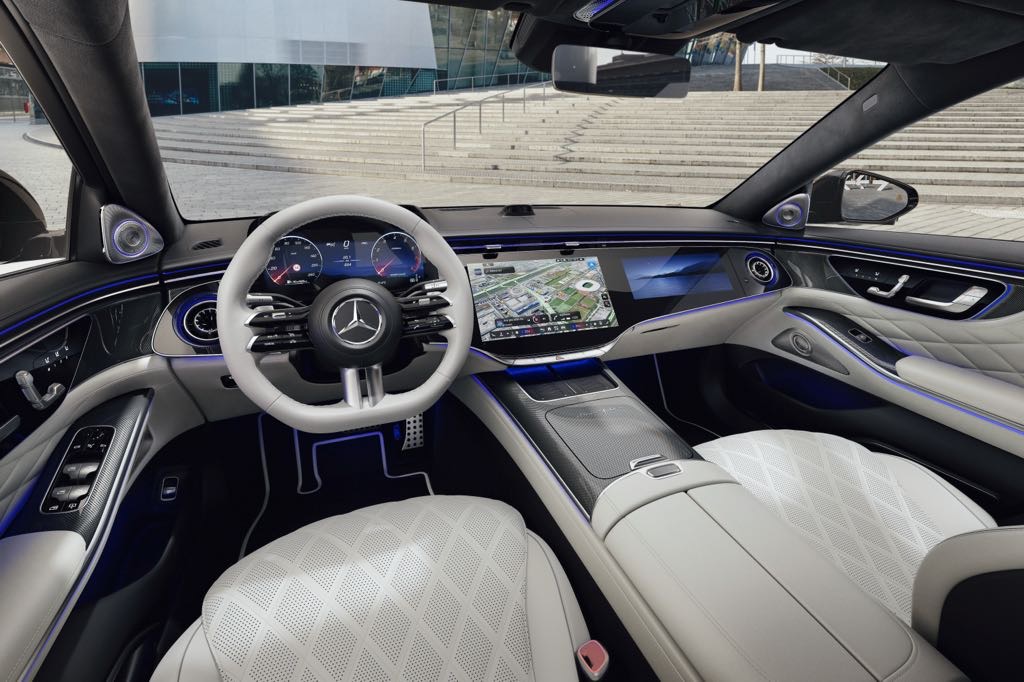
A liquid-cooled control unit manages everything from lighting and suspension to advanced driving systems. The cabin layout reflects this shift. The earlier leather-and-wood dashboard design has been replaced by a gloss black panel housing a three-screen “Superscreen” setup. A 12.3-inch driver display and matching passenger screen flank a large 14.4-inch central touchscreen that serves as the core interface.
MB OS integrates AI-powered voice assistance, cloud-connected navigation and vehicle-to-everything communication. The S-Class is now designed to receive functional over-the-air updates, reinforcing its role as a software-defined vehicle.
Standard equipment includes the latest generation of MB Drive Assist. In select global markets, a more advanced Drive Assist Pro package introduces higher levels of automated driving where regulations permit. Adaptive air suspension remains standard while rear-axle steering is now included in base specification in a reduced-angle form.
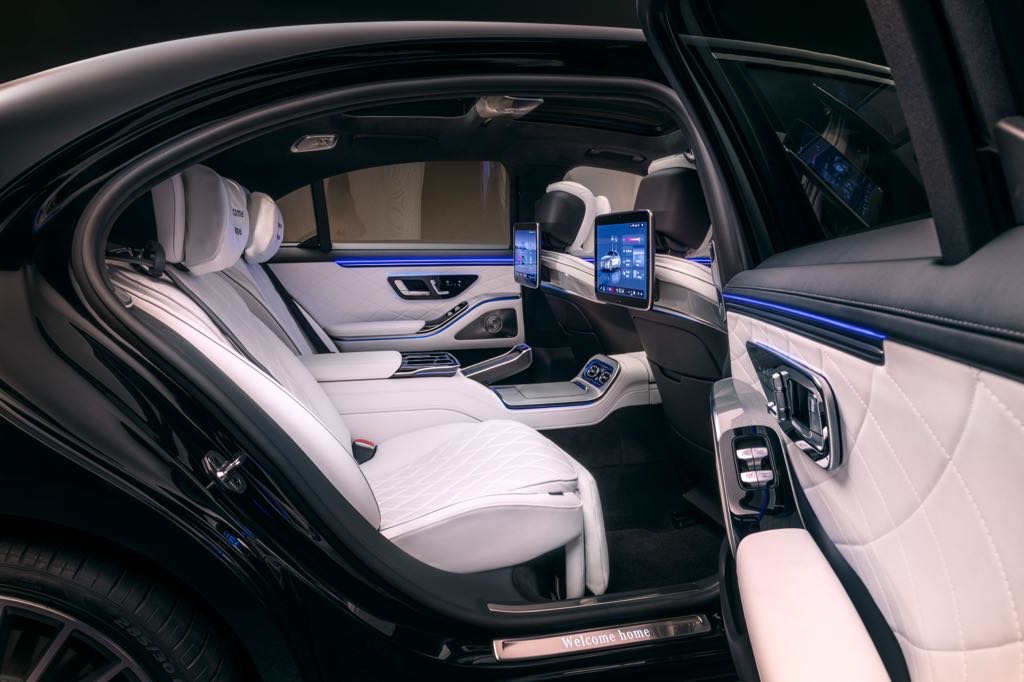
The interior continues the shift toward digital minimalism. Including rear entertainment displays, the cabin now features up to seven screens. Two 13.1-inch touchscreens remain mounted behind the front seats while the previous rear tablet controller is replaced by individual handheld-style controllers.
Despite the technology focus, material quality remains a priority. Leather upholstery, optional quilting and selected wood trim are still available, though the visual emphasis has moved toward illuminated metallic accents and hidden climate controls. Powered air vents can be adjusted digitally or manually and ambient lighting plays a more active role in the cabin atmosphere.
Biometric access has evolved as well. Facial recognition replaces the fingerprint scanner and supports user identification, in-car video calls and cabin monitoring while parked. Mercedes has also made ergonomic revisions, adding physical scroll and toggle controls to the steering wheel and relocating the wireless charging pads for easier access.
Rear-seat comfort remains largely unchanged, which reflects how comprehensive it already was. The India-bound long-wheelbase version continues to offer deep recline, heating, ventilation and massage functions along with optional executive seating layouts.
Powertrain revisions focus on meeting upcoming Euro 7 emissions norms rather than introducing entirely new engines. Both the six-cylinder diesel and petrol V8 remain part of the range, supported by an upgraded 48V mild hybrid system and integrated starter generator that improves responsiveness and smooths transitions between electric assistance and engine power.
The 4.0-litre twin-turbo V8, now known as the M177 Evo, adopts a flat-plane crankshaft and dual balancer shafts. Output in the S 580 reaches 537 HP and 750 Nm. Engineers have also revised intake and exhaust flow and added insulation improvements for refinement.
The six-cylinder petrol and diesel units receive their own emissions-focused upgrades, including revised combustion systems and after-treatment hardware. Plug-in hybrid variants extend their electric-only range to around 100 km, a notable increase over the previous setup.
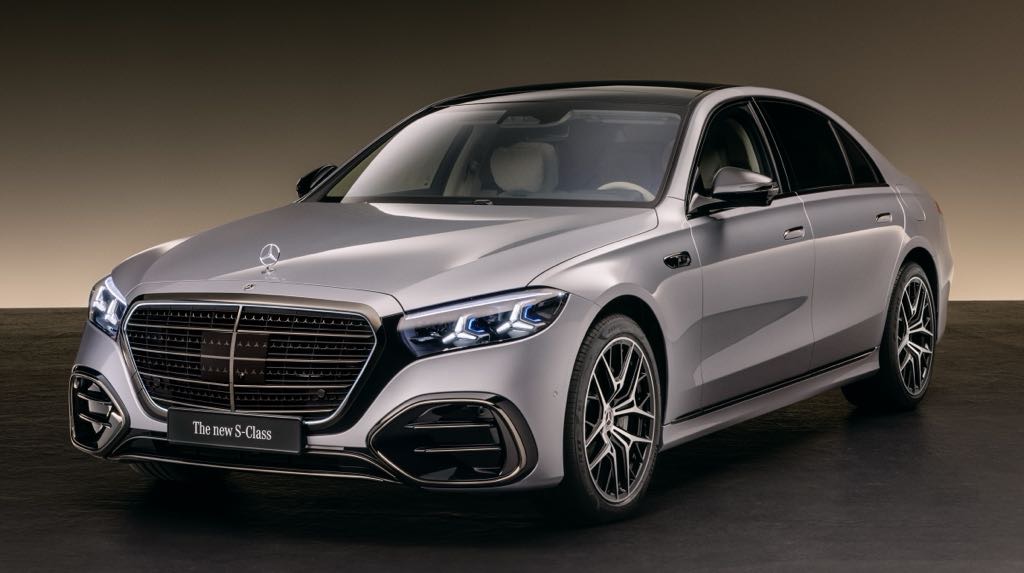
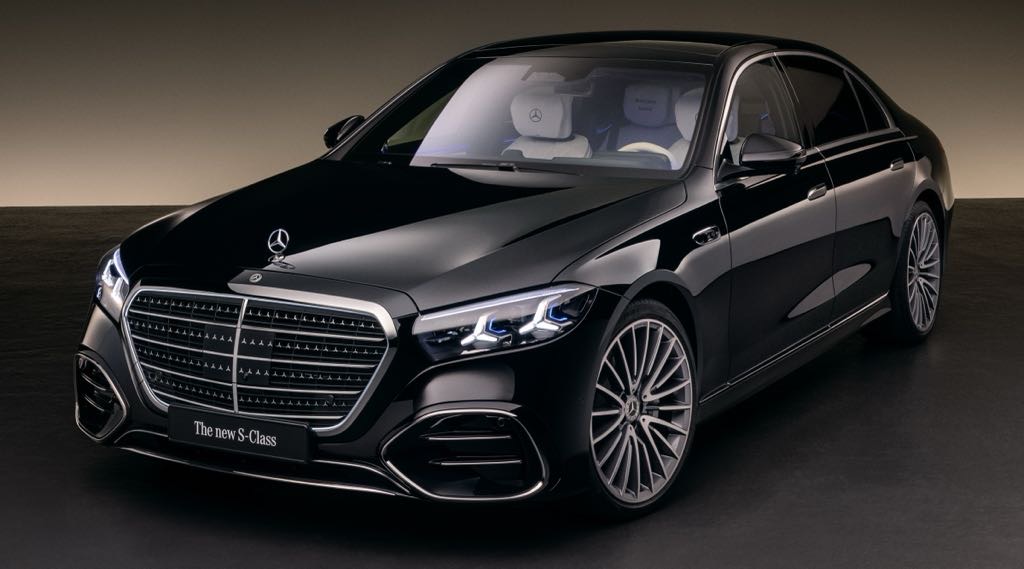
Visually, the facelift introduces a more expressive interpretation of the S-Class design language while keeping its familiar proportions. The grille is larger and features illuminated detailing along with integrated star motifs. Even the bonnet-mounted emblem receives subtle illumination.
Headlamps grow in size and adopt the latest Digital Light micro-LED technology for improved brightness and efficiency. New alloy wheel designs and additional paint finishes expand personalization options, many drawn from the brand’s bespoke catalogue.
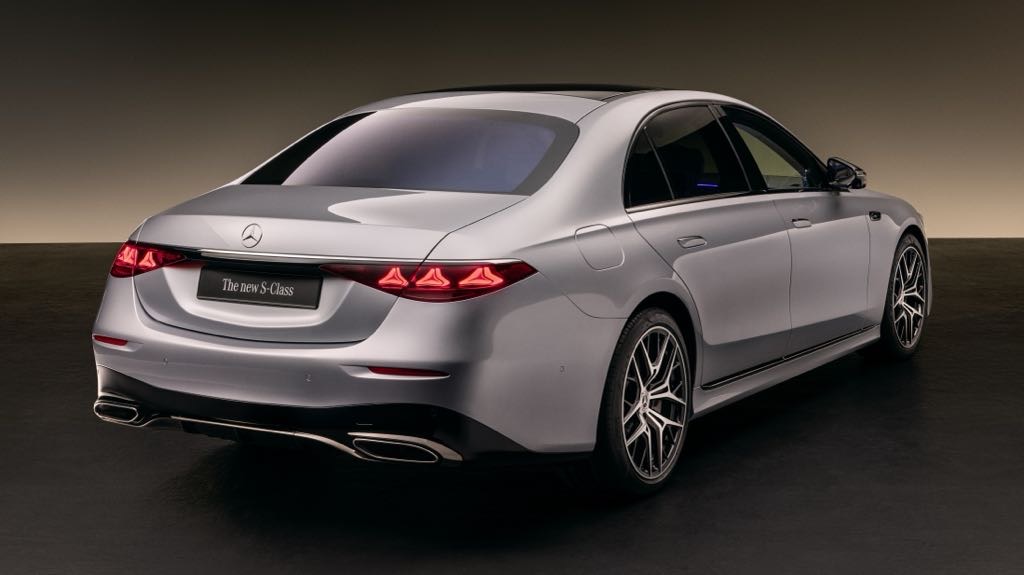
At the rear, slimmer tail-lamps incorporate star-shaped LED signatures that echo the front lighting theme. Additional cameras, radars and ultrasonic sensors are integrated discreetly into the bodywork to support expanded driver assistance capabilities.
The 2026 S-Class facelift marks a clear pivot toward software-led luxury motoring. While traditional craftsmanship remains present, the emphasis has shifted toward computing power, connectivity and advanced driver assistance. For buyers, the update represents a blend of familiar flagship comfort and a strong push into the next phase of automotive digitalization.