Ferrari reveals analogue-inspired interior of its first electric car Luce
Ferrari has unveiled the interior of its first fully electric model, which will be called the Ferrari Luce. Pronounced “Lu-chey” and translating to “Light” in Italian, the EV was previously referred to as the Elettrica during its development phase. A full global reveal of the production model is scheduled for May 2026.
The Luce’s cabin has been designed in collaboration with LoveFrom, the creative firm founded by Marc Newson and former Apple design chief Sir Jony Ive. The partnership extends to both the interior and exterior design. The cabin reflects a distinctive blend of analogue-inspired elements and modern digital interfaces, with an emphasis on physical controls rather than relying entirely on touch-based systems.
Focus On Physical Controls
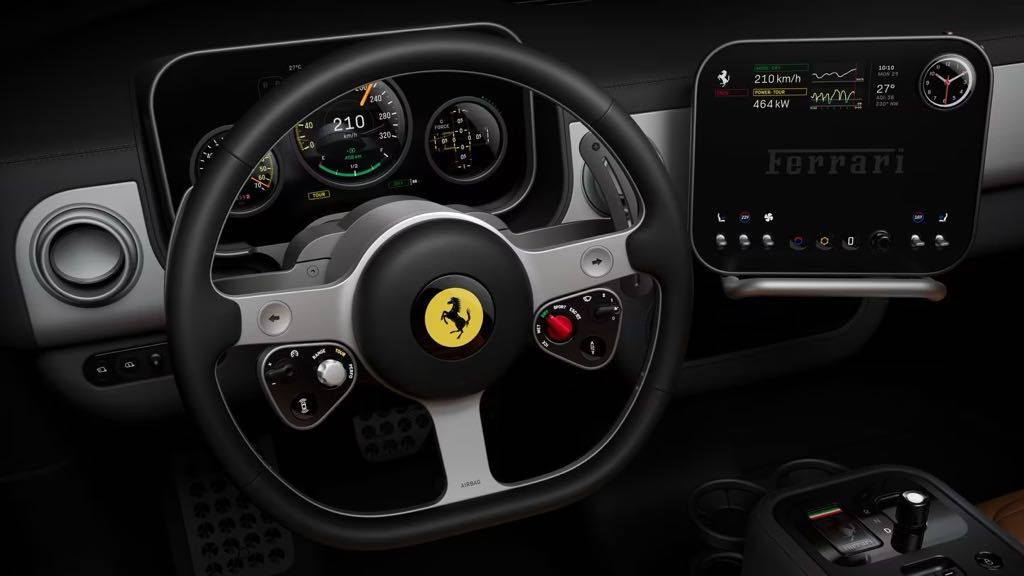
Unlike many contemporary EV interiors that prioritise large, screen-dominated dashboards, the Luce adopts a more tactile approach. Key vehicle functions are operated through physical buttons, rotary knobs and toggle switches. The three-spoke steering wheel draws inspiration from classic Ferraris of the 1950s and 1960s, featuring a thin rim and multiple physical controls for indicators, wipers, cruise functions and drive modes, alongside the signature red Manettino switch. A dedicated rotary controller allows drivers to switch between Range, Tour and Performance modes.
Screens With An Analogue Aesthetic
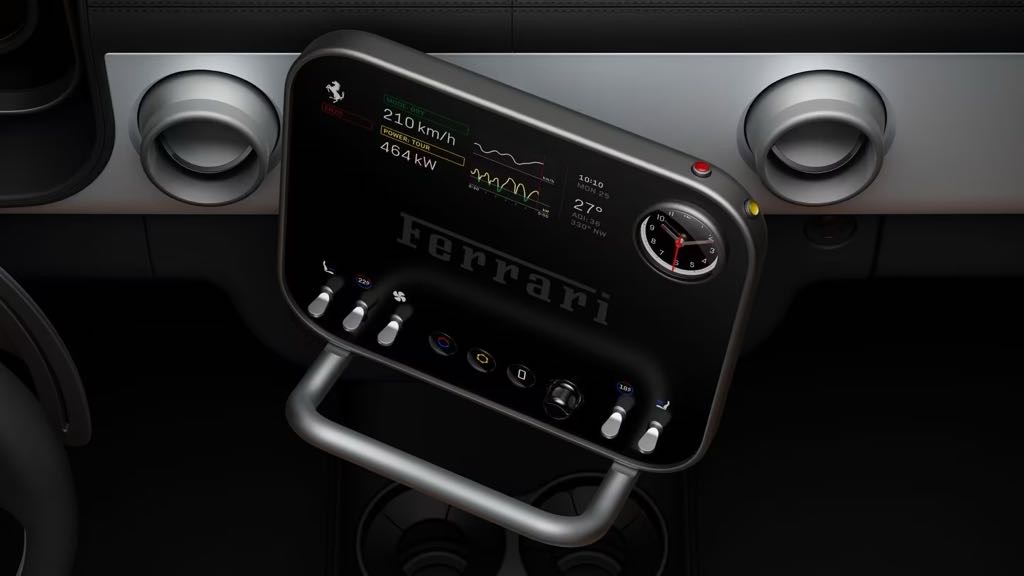
While digital displays remain part of the cabin, Ferrari has opted for a restrained layout. The central infotainment system consists of a 10-inch touchscreen designed to resemble a tablet. It features a prominent grab handle that also acts as a support when interacting with the display. Beneath the screen are physical toggle switches for media and climate functions.
Above the centre stack sits a clock unit combining analogue dials with a configurable digital display capable of functioning as a compass or lap timer. Ferrari states that this element required extensive development, with each dial operating independently through a geared mechanism.
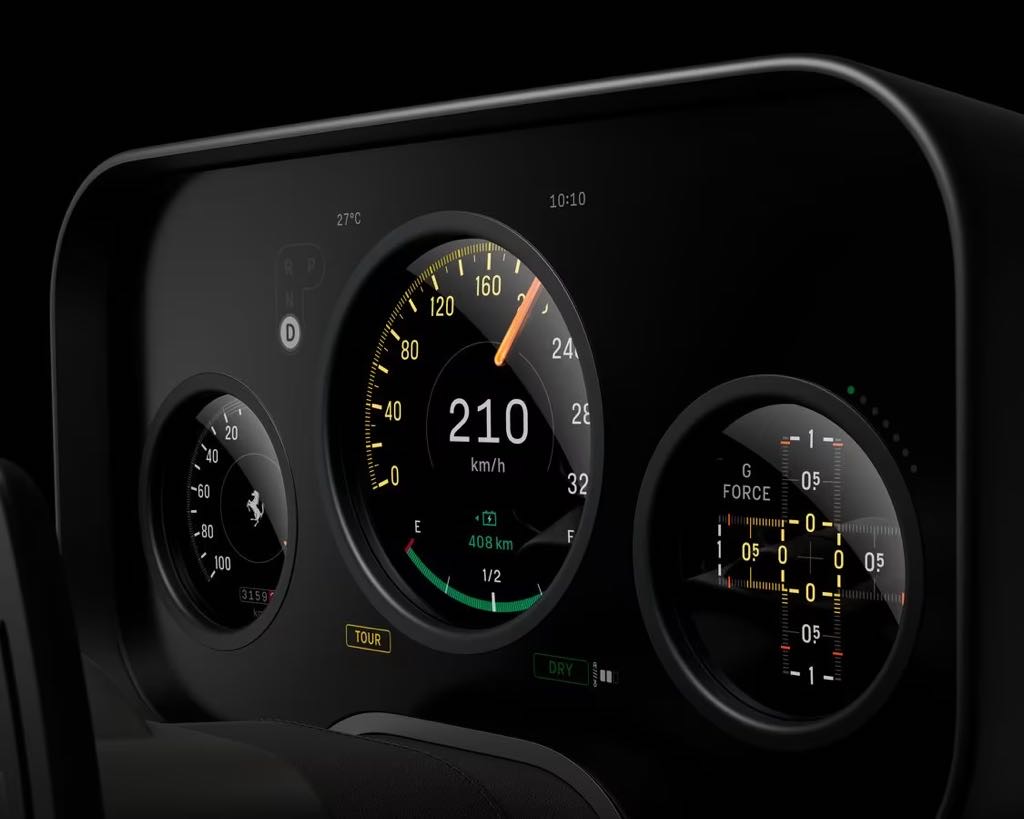
The instrument cluster measures 12.5 inches and is designed to resemble three traditional dials housed within a black casing. In reality, the entire binnacle is an OLED panel built from multiple layers, including two bespoke Samsung OLED displays. The centre dial displays speed with a physical needle, while the flanking sections adapt according to selected driving modes. Additional information such as warning indicators and navigation prompts is integrated into the surrounding display area.
Centre Console & Unique Start Mechanism
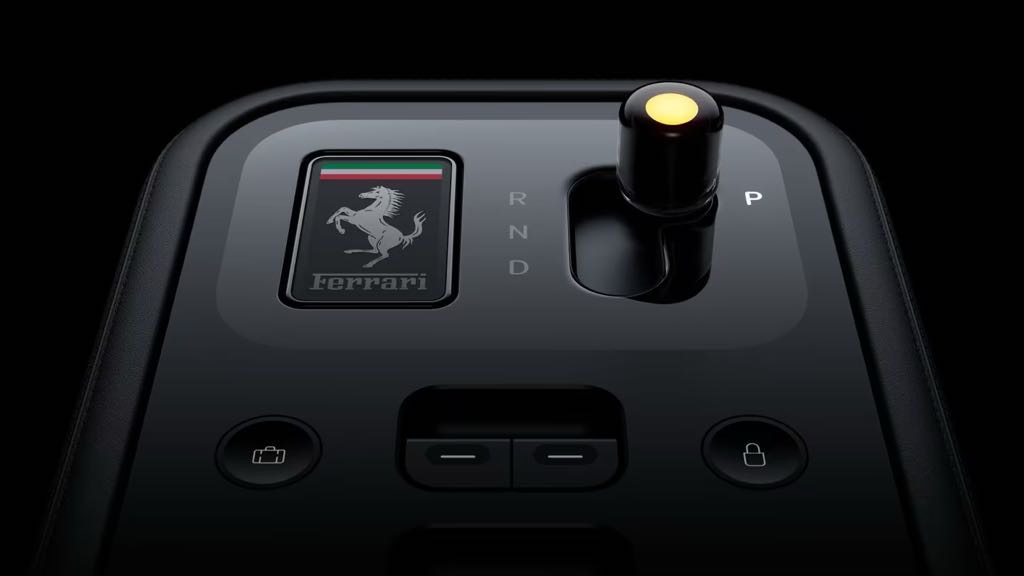
The floating centre console incorporates leather and glass elements and houses a compact drive selector made of glass. A distinctive feature is the dedicated slot for the vehicle key. The key must be inserted into a recess to start the car, triggering a visual transformation in its colour theme that Ferrari describes as symbolically transferring power to the vehicle.
Other features include a launch control activation grip positioned above the driver’s head, separate storage compartments, cup holders and physical window switches. Rear passengers are provided with a dedicated touchscreen displaying vehicle data such as speed and lap timing.
Despite the strong references to Ferrari’s heritage, the design team has indicated that the intention was not to recreate the past but to combine analogue engagement with modern technology in a new format. The Luce represents Ferrari’s attempt to define a distinct interface philosophy as it enters the electric era.