

Hyundai Motor India has outlined plans to expand its SUV portfolio with two new nameplates over the next two financial years, as part of its strategy to strengthen its presence in one of the most competitive segments in the country. The company confirmed these developments in its FY2025–26 investor presentation, indicating a continued focus on both internal combustion engine (ICE) and electric vehicle (EV) segments.
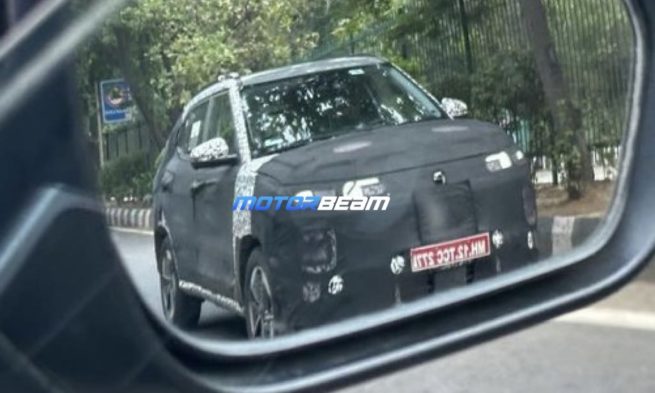
One of the upcoming models will target the mid-size SUV category, positioned around the Hyundai Creta, while the second will be a locally developed electric compact SUV aimed at higher-volume EV segments.
Hyundai’s upcoming ICE-powered SUV is expected to be introduced in FY2027. It will be based on the global Hyundai Bayon platform, currently sold in international markets. With an estimated length of around 4.18 metres, the new SUV could slot just below the Creta in Hyundai’s lineup, though it may still compete within the broader mid-size SUV space depending on pricing and positioning.
Internally codenamed Bc4i, the SUV is likely to prioritise efficiency and affordability. Powertrain options are expected to include a naturally aspirated petrol engine along with a factory-fitted CNG variant featuring a dual-cylinder setup. If introduced, this would mark Hyundai’s entry into offering CNG in a vehicle above the 4-metre category.
The model is also expected to feature a technology-focused cabin and advanced driver assistance systems (ADAS), areas where Hyundai has traditionally maintained a competitive edge. The move reflects a broader industry trend where manufacturers are expanding offerings within similar segments using varied fuel options and feature packages.
Alongside the ICE model, Hyundai is preparing to launch a new electric compact SUV during the current financial year. The vehicle will be developed specifically for India and is expected to compete with established models like the Tata Nexon EV.
Codenamed HE1i, the EV will be underpinned by a modified version of Hyundai’s E-GMP platform, similar to what is used in the global Hyundai Inster. Production is slated to take place at Hyundai’s Sriperumbudur facility in Tamil Nadu, with battery packs sourced locally.
The electric SUV is likely to be offered in multiple configurations, including standard and long-range variants. International versions of related models offer battery options in the 40–50 kWh range, with driving ranges exceeding 300 km, although final India-spec figures are yet to be confirmed.
Hyundai’s dual-SUV approach highlights its attempt to regain momentum in a segment that has seen increasing competition from domestic manufacturers and new entrants. By introducing differentiated products around the Creta—across fuel types, pricing and features—the company aims to widen its appeal among urban buyers and cost-conscious customers alike.
This strategy also aligns with a broader industry shift, where carmakers are introducing multiple models within similar segments to cater to diverse customer needs rather than relying on a single high-volume product.