Maharashtra has taken a significant step toward improving connectivity between two of its busiest cities with the inauguration of a new route on the Mumbai-Pune Expressway. Chief Minister Devendra Fadnavis formally opened the long-awaited ‘Missing Link’, a project designed to ease congestion and enhance travel efficiency on this crucial corridor.
The newly constructed 13.3km stretch bypasses the older 19.8 km ghat section near Khandala, which has long been known for heavy traffic and accident risks. By offering a shorter and more direct alternative, the route is expected to cut travel distance by around 6km and reduce journey time by approximately 25 minutes under normal conditions.
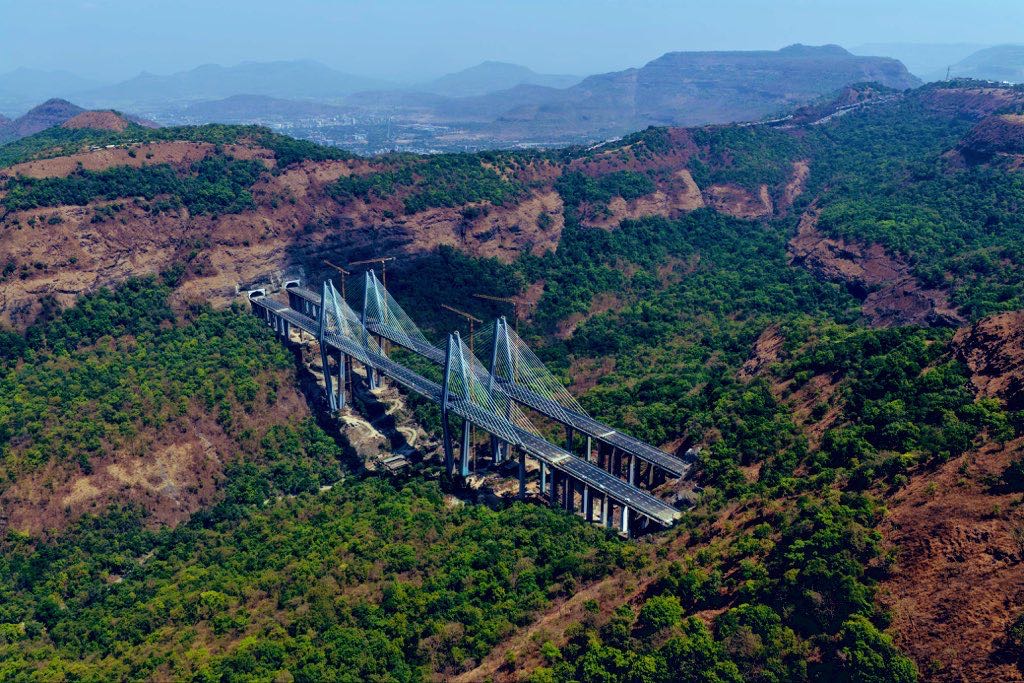
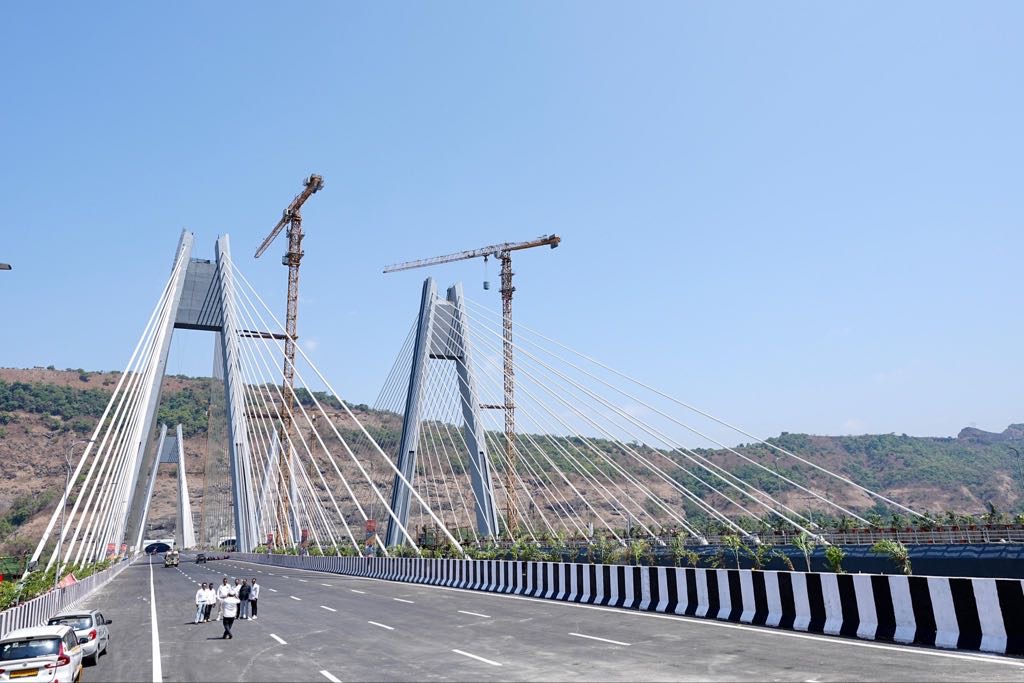
Built at a cost of ₹6,695 crore, the Missing Link is a complex engineering project featuring two tunnels and a cable-stayed bridge. The tunnels, measuring roughly 1.6 km and 8.9 km in length, are among the widest of their kind globally, while the 650 m bridge spans the Tiger Valley near Lonavala at a height of about 125 m. The project also incorporates modern safety systems, including emergency cross passages, automated traffic monitoring and fire-control mechanisms.
Originally conceived as part of the expressway’s initial plan in the early 2000s, the Missing Link faced delays due to financial, environmental and technical challenges. It was eventually revived in 2018, with construction commencing a year later.
From an operational standpoint, the new route is designed for higher efficiency. It allows speeds of up to 100 km/hr, compared to the 60 km/hr limit on the older ghat section. While it still includes gradients, these are less steep, making for a smoother driving experience.
The potential benefits extend beyond time savings. The ghat stretch has frequently witnessed severe congestion, especially during monsoons and peak travel periods. Incidents such as accidents or vehicle breakdowns have historically caused prolonged disruptions. By diverting a portion of traffic, authorities expect the Missing Link to improve overall traffic flow and reduce such bottlenecks. Estimates also suggest daily fuel savings could be substantial due to reduced idling and shorter travel distances.
Importantly, there will be no additional toll for using the new section; motorists will continue to pay the existing toll applicable on the expressway. However, in the initial phase, access will be limited to private vehicles, light motor vehicles and buses. Heavy goods vehicles are expected to be allowed after a review period of about six months, while vehicles carrying hazardous materials will remain restricted.
Although the project has been inaugurated, the new route is set to open for public use shortly after final preparations and site clearances are completed.