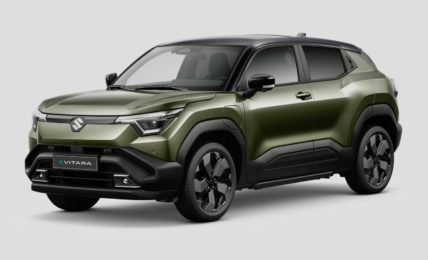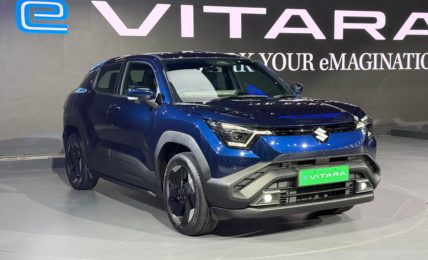
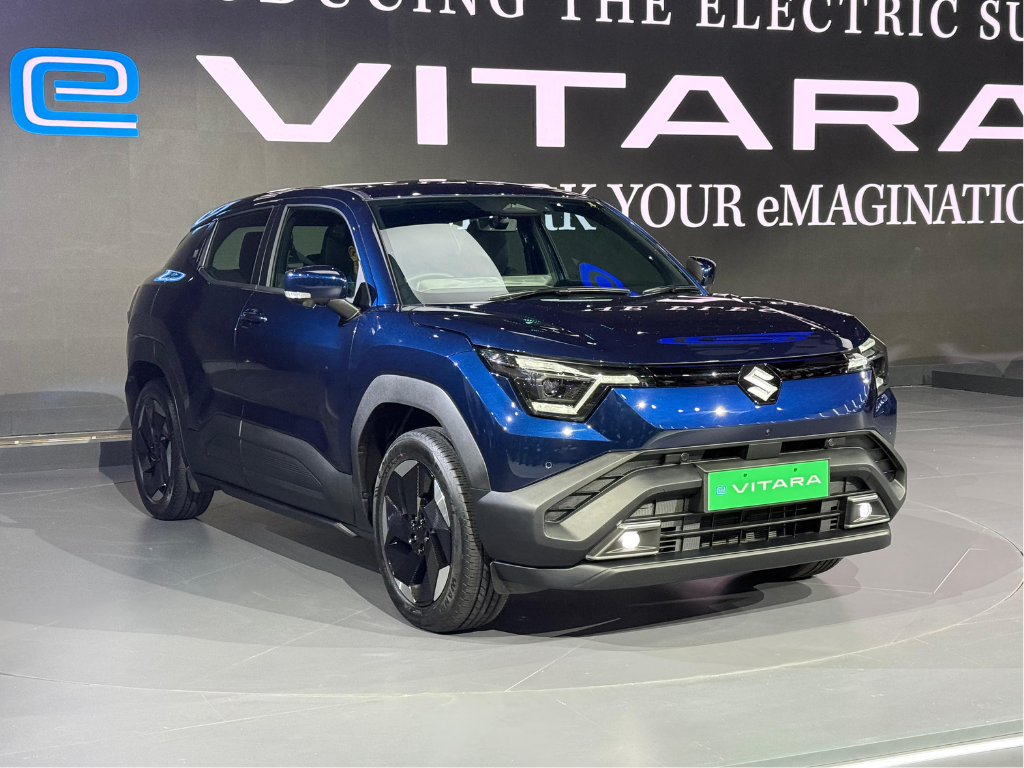
Maruti unveils e Vitara with 543 km range and major charging push
Maruti Suzuki has revealed the India-spec e Vitara, its first all-electric model for the domestic market. The electric SUV will be offered with two battery pack options and is scheduled to go on sale in early 2026. Bookings are expected to begin soon.
The e Vitara will be available with 49kWh and 61kWh battery packs, both paired with a front-wheel-drive layout. The larger 61kWh variant delivers an ARAI-certified range of up to 543 km, placing it among the higher-range EVs in the segment. The model will be sold in three trims: Delta, Zeta and Alpha, with the base variant using the smaller battery pack while the higher trims get the larger one. Maruti has also confirmed that the EV has achieved a 5-star Bharat NCAP rating.
Charging Network and Infrastructure Plans
Maruti Suzuki has rolled out more than 2000 fast-charging points across 1100+ cities as part of the e Vitara’s ecosystem. The company has partnered with 13 charge point operators to expand public charging access and aims to develop a nationwide network of over 1 lakh chargers by 2030, supported by its dealer network and charging partners.
According to the company, customers should be able to find a charger every 5-10 km, with all charging locations accessible through the ‘E For Me’ app. In addition, Maruti has over 1500 EV-ready workshops for after-sales support, along with a doorstep service facility.
Powertrain and Market Positioning
The e Vitara is being introduced during a period of rapid EV expansion in India and will compete with upcoming and existing models such as the Hyundai Creta Electric, VinFast VF6, MG ZS EV, Mahindra BE.6 and Tata Curvv EV. Maruti will also offer subscription plans and Battery-as-a-Service (BaaS) options for customers seeking lower upfront ownership costs.
With exports planned and an India launch set for early 2026, the e Vitara marks an important step in Maruti Suzuki’s EV strategy as the company prepares to enter a segment dominated so far by Korean, Chinese and domestic rivals.