Supreme Court Dismisses PIL Against E20 Fuel Policy, Warranties To Be Honoured By Automakers
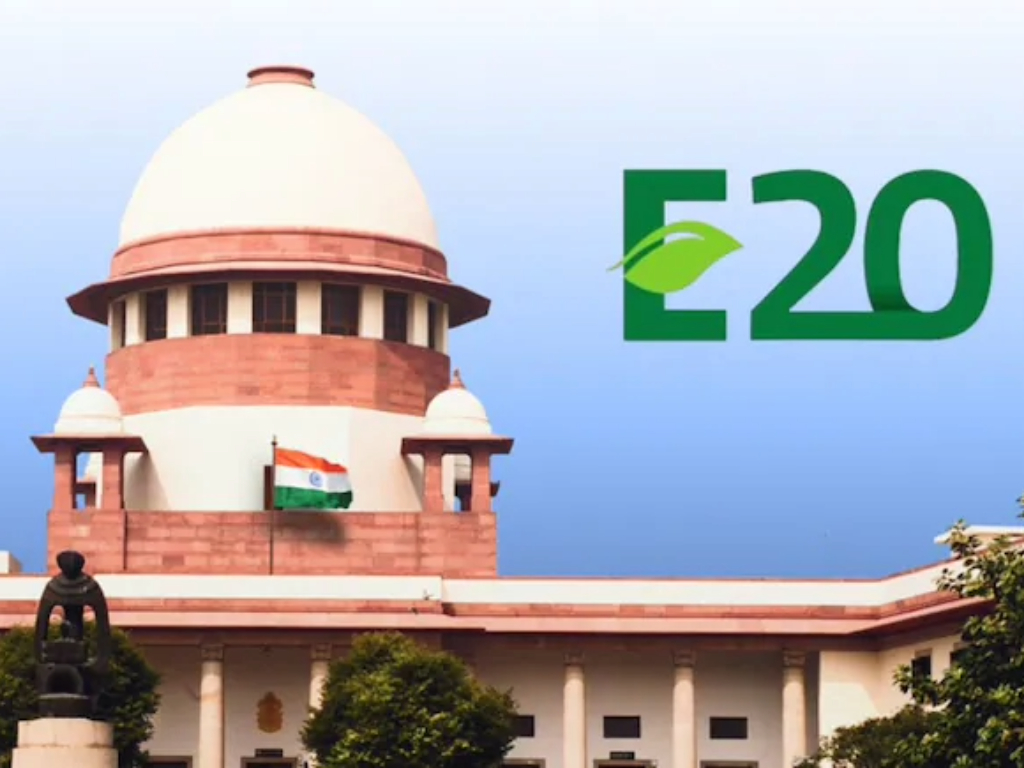
The Supreme Court dismissed a PIL challenging the nationwide E20 petrol rollout. The petition claimed motorists were forced to use unsuitable E20 fuel without an ethanol-free option. CJI Gavai and Justice Chandran upheld the government’s defense supporting farmers and cutting foreign exchange outflow.
Concerns
Advocate Farasat cited NITI Aayog’s 2021 report on E20’s impact on vehicle efficiency. He clarified that the petitioner was not opposed to ethanol blending but demanded ethanol-free petrol for vehicles manufactured before April 2023, which are not E20-compatible. The plea further highlighted that older vehicles face uncertain risks, as manufacturers and insurers may refuse claims if damage is linked to ethanol use.
ARAI Reports
Oil firms, component makers, and ARAI collaborated to tackle concerns. ARAI tested vehicles manufactured between 2005 and 2021 and reported no significant impact from E20 use. However, these findings have not been made public due to non-disclosure agreements with OEMs, raising doubts among consumers.
Officials have also claimed that no failures were found in vehicles older than ten years, but long-term data on component wear remains unavailable. Millions of old cars and bikes continue to ply Indian roads, and uncertainty over damage risks outside warranty coverage adds to user worries, particularly for discontinued models.
While the government insists that efficiency loss is marginal, motorists report real-world drops of 10 to 20%. This discrepancy has intensified consumer frustration, especially with fuel prices unlikely to decrease. A notable relief for older vehicle owners is that the warranties will be now honoured by automotive manufacturers in regards to damage caused by E20 fuel.
Arguments
Attorney-General R. Venkataramani, representing the Union government, alleged that the petitioner was a foreign resident acting on behalf of vested lobbies. He asserted that the policy serves national interest by bolstering sugarcane farmers’ incomes and cutting crude oil imports. The Ministry stated E20 enhances acceleration, ride quality, and aids farmers.
Outlook
Questions persist on transparency and consumer protection post-PIL dismissal. E5 and E10 phased out, leaving motorists with no choice but E20. An important step that should be taken by the government is to reassure older vehicle owners with clarity on the ARAI test results.