Mercedes-Benz has introduced a refreshed version of its flagship electric sedan, the EQS, bringing notable upgrades to its electrical architecture, efficiency and onboard technology. The facelift focuses on enhancing range, performance and user experience, while also incorporating subtle design revisions.
A key highlight of the update is the shift to an 800V electrical architecture, aimed at improving charging speeds and overall efficiency. The revised EQS lineup includes multiple variants such as the EQS 400, EQS 450+, EQS 500 4MATIC and EQS 580 4MATIC, catering to a range of performance and drivetrain preferences.
The updated EQS sees gains in driving range across the lineup. The EQS 450+ now offers a claimed WLTP range of up to 926 km, marking a significant improvement over its predecessor. Other variants also benefit from increased range, with the EQS 400 delivering up to 817 km and the all-wheel-drive EQS 500 4MATIC and EQS 580 4MATIC offering up to 876 km.
Battery capacities now extend up to 122kWh, with a smaller 112kWh pack available on lower variants. Power outputs range between 367 HP and 585 HP depending on the version. The introduction of a two-speed transmission on the rear axle is intended to balance acceleration and efficiency, while regenerative braking capability has been enhanced to up to 385kW.
The EQS also supports DC fast charging of up to 350kW, enabling a substantial range addition in a short time. Additionally, bidirectional charging features such as vehicle-to-home and vehicle-to-grid are supported in select markets.
Mercedes-Benz has updated the EQS’ air suspension system with predictive capabilities that use cloud-based data. This allows the system to adapt damping characteristics based on road conditions identified by other connected vehicles, potentially improving ride comfort and stability.
Another notable addition is the optional steer-by-wire system, paired with a yoke-style steering wheel. This technology eliminates the mechanical connection between the steering wheel and front wheels, relying instead on electronic signals. Mercedes-Benz plans to introduce this feature shortly after the initial launch, positioning it as a first for a German production model.
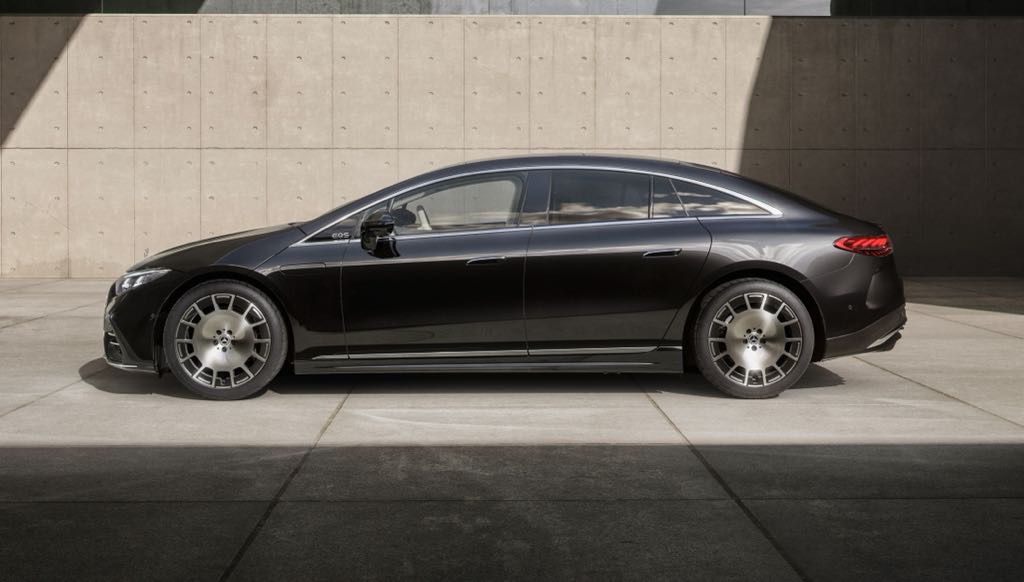
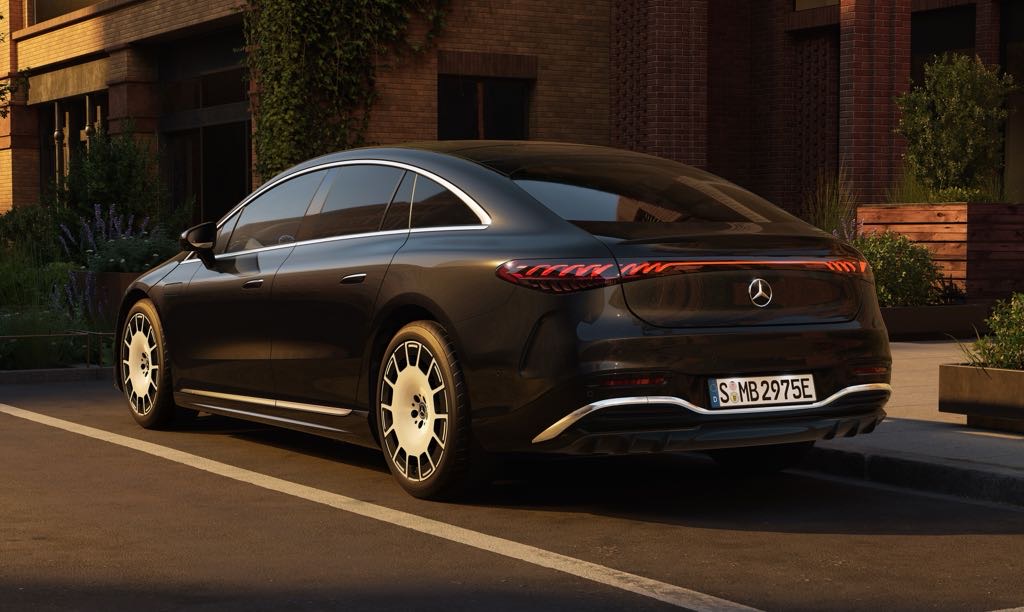
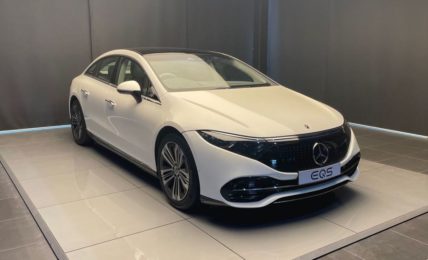
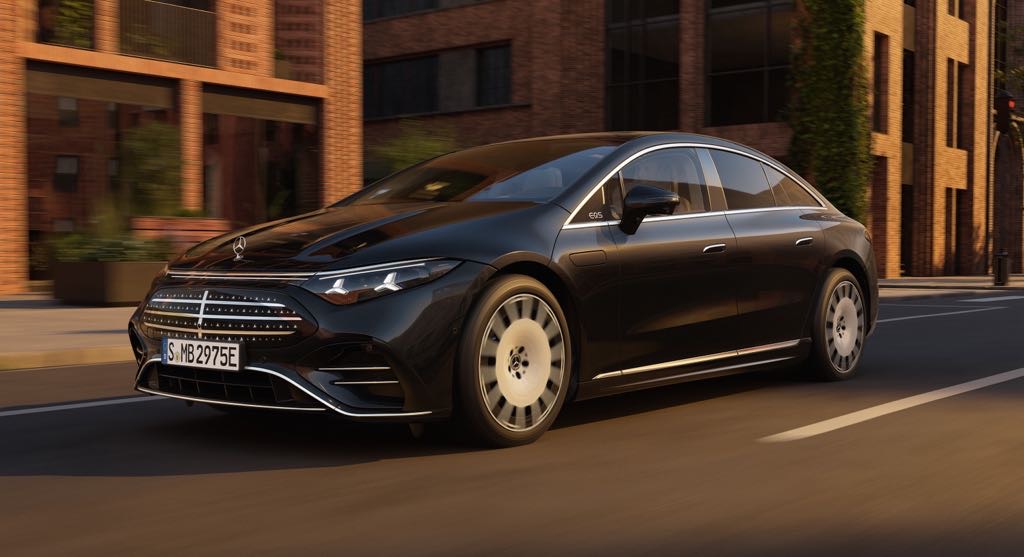
Visually, the EQS retains its distinctive coupe-like profile but receives updated styling elements at both ends. The front features a redesigned grille with illuminated star patterns and revised lighting elements integrated into the light bar. At the rear, the connected light strip gets updated detailing, while the bumper design has been reworked.
Aerodynamic efficiency continues to be a priority, with the EQS maintaining a drag coefficient as low as 0.20.
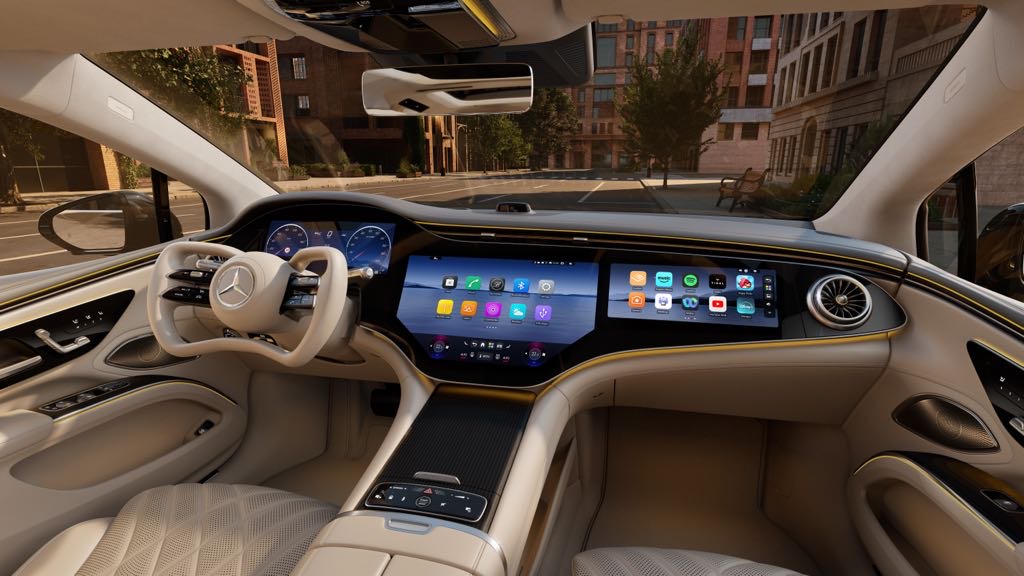
Inside, the EQS continues with the MBUX Hyperscreen setup, combining three displays within a single glass panel. The system now operates on the latest MB.OS software and supports over-the-air updates. A new AI-based virtual assistant has also been introduced, alongside navigation that factors in energy consumption and charging stops.
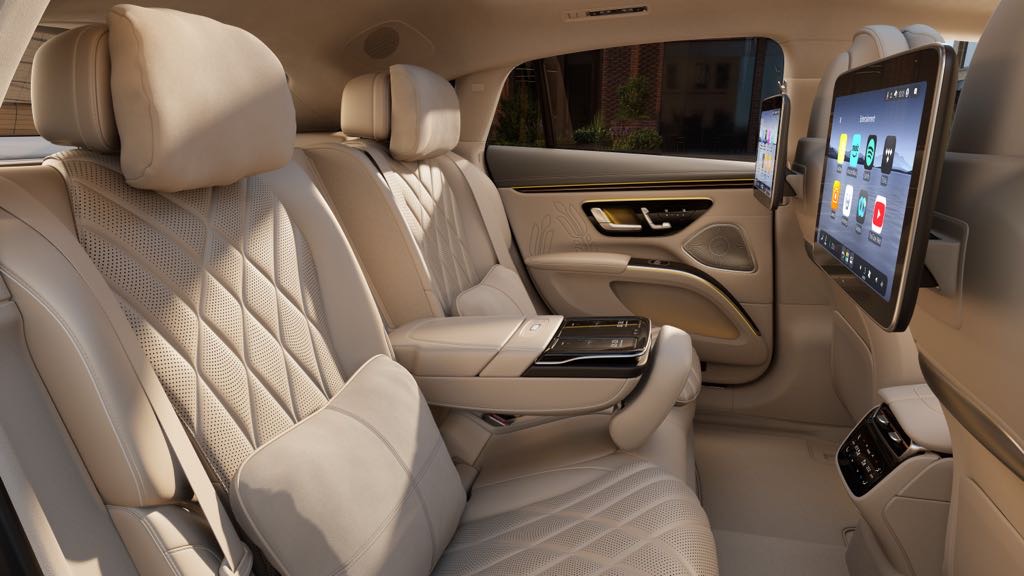
Rear passengers benefit from twin 13.1-inch displays, while features such as a HEPA air filtration system, enhanced parking assist and updated driver assistance systems further elevate the experience.
The updated EQS is expected to reach European and US markets in the latter half of 2026. While there is no official confirmation for India yet, a launch could follow at a later stage.