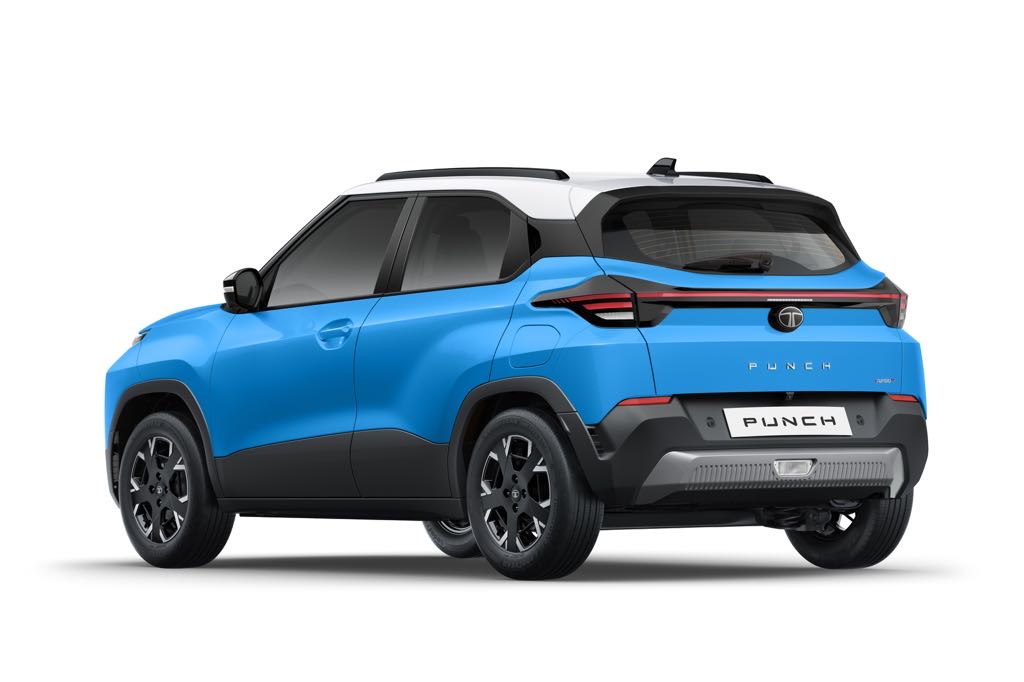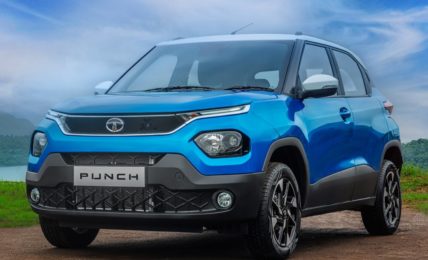
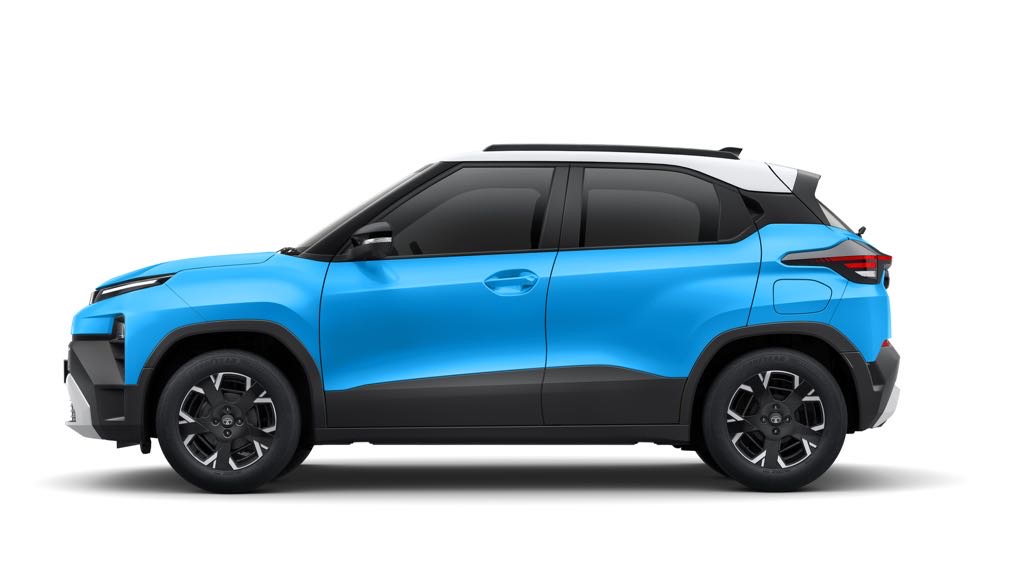
Tata hints at a diesel Punch, pending customer demand and business viability
Tata Motors has hinted that a diesel powered Punch may still be on the table if customer demand supports it. Following the recent debut of the 1.2-litre turbo-petrol engine, Tata says future powertrain decisions for the sub-compact SUV will continue to be guided by market feedback rather than being restricted to a single fuel strategy.
The Punch received the more powerful 120 HP turbo petrol unit from the Nexon, giving the model a much-needed performance upgrade. However, according to Mohan Savarkar, Chief Product Officer at Tata Motors Passenger Vehicles, the brand’s powertrain roadmap for the Punch is still flexible. He noted that while the turbo-petrol was the logical next step, other options – including diesel or even a turbo-petrol DCT – could be explored if customers express interest.
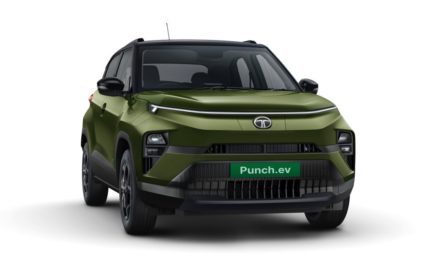
Savarkar pointed out that the Punch has evolved steadily based on consumer behaviour. The model launched with a simple petrol-AMT setup, later added CNG and eventually received an electric version before the turbo-petrol arrived. This multi-powertrain approach, he said, remains central to Tata’s product philosophy. When asked about diesel, Savarkar did not dismiss the idea, remarking that “there’s no reason not to look at it” if feedback supports such a move.
The broader market context, however, makes a diesel Punch far from straightforward. With the rollout of BS6 Phase 2 (RDE) norms, most manufacturers withdrew diesel engines from smaller cars due to compliance costs and shrinking demand. Tata stands out as the only brand still offering a diesel hatchback – the Altroz and continues to offer diesel engines across much of its SUV portfolio consisting of the Harrier, Safari, Nexon, Curvv and the upcoming Sierra.
Technically, a diesel Punch is feasible as it shares the ALFA platform with the Altroz, which already runs a 1.5-litre four-cylinder diesel. But engineering integration, calibration, certification and homologation would require significant investment. For diesel to make financial sense, demand must be large enough to offset these development costs.
Consumer interest is also uncertain. Diesel once dominated the SUV segment in India but regulatory pressures, higher manufacturing costs and changing fuel economics have pushed customers toward petrol and CNG. Even the Nexon – positioned above the Punch – now sees diesel contribute less than 16 percent of its sales mix. For a smaller SUV like the Punch, the business case becomes even more complex.
Despite this, a diesel Punch could become a market differentiator, particularly against the Hyundai Exter which currently lacks such an option. The Altroz diesel, though modest in volume at roughly eight percent of its total sales, proves that niche demand can exist at the lower end of the market. Tata continues to emphasize that the Punch is designed as a ‘true’ SUV built for rougher road conditions rather than a hatchback with cladding, and a diesel may reinforce that positioning.
For now, Tata is keeping its cards open and allowing customer sentiment to dictate what comes next. Whether diesel returns to the smallest end of the SUV spectrum will depend on how strongly buyers voice their preferences in the coming months and years.