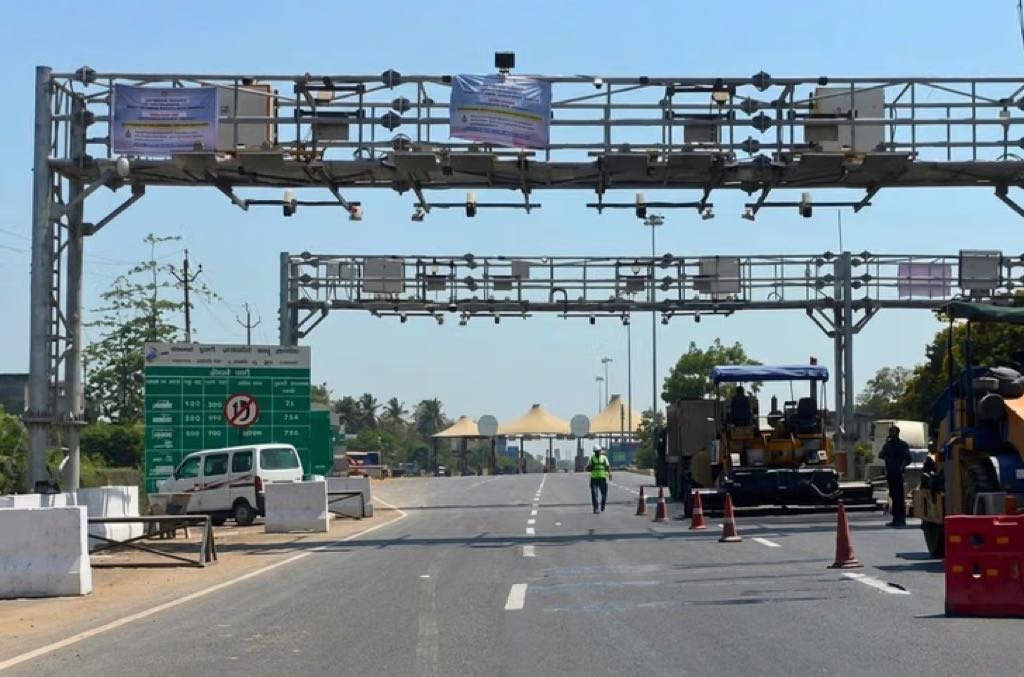
India has taken a step toward modernising its highway infrastructure with the rollout of its first barrier-free tolling system. The Multi-Lane Free Flow (MLFF) system has been introduced at the Chorayasi Toll Plaza on the Surat–Bharuch stretch of National Highway 48 in Gujarat, marking a shift away from traditional toll collection methods that require vehicles to stop.
The MLFF system uses Automatic Number Plate Recognition (ANPR) cameras along with FASTag integration to identify vehicles and deduct toll charges electronically. This allows vehicles to continue moving at regular highway speeds without halting at toll booths.
Unlike conventional systems, where barriers and manual checks slow down traffic, the new setup is designed to enable seamless movement through toll points. The government has indicated that vehicles could pass through at speeds of up to 80 km/hr without interruption, although no fixed speed limit has been formally specified.
Officials say the initiative is aimed at reducing congestion at toll plazas, cutting travel time and improving fuel efficiency. By minimising idling and stop-start traffic, the system is also expected to contribute to lower vehicle emissions.
Additionally, the reduced need for manual intervention is seen as a move toward a more digital and automated tolling ecosystem, aligning with broader infrastructure modernisation efforts.
The Gujarat pilot is part of a larger plan to expand barrier-free tolling across the country. Reports indicate that the government is considering implementing the MLFF system at more than 1000 toll plazas by the end of 2026, depending on the success of initial deployments.
To ensure compliance, the system includes an electronic monitoring framework. If toll charges are not deducted successfully, vehicle owners receive a digital notification detailing the trip and outstanding amount. Users are given a 72-hour window to settle the payment without penalty.
Failure to pay within this period could result in additional charges, potentially up to twice the original toll amount. Vehicle owners also have the option to dispute charges within the same timeframe, with cases expected to be resolved within a defined period.
Persistent non-payment may lead to further consequences, including restrictions linked to the national vehicle registration database, which could affect access to certain vehicle-related services.
The introduction of barrier-free tolling reflects a broader push toward smarter, more efficient highway systems in India. While the initial rollout is limited, its expansion could significantly change how toll collection operates across the country, provided technological and operational challenges are effectively addressed.